

It’s ironic that the government’s first priority in launching the National Centre for Information Defence (NCID) will be to defend it.
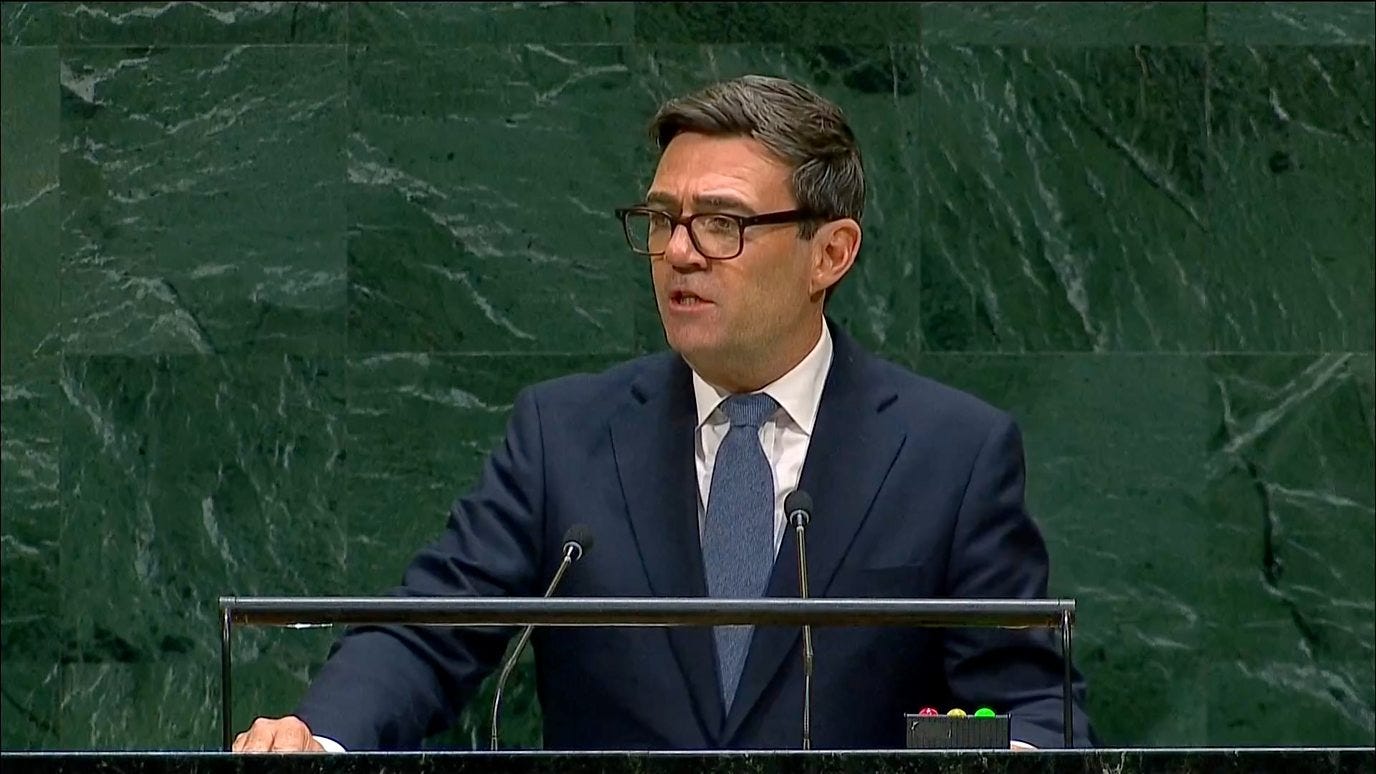
Prime Minister Andy Burnham told the UN General Assembly this week that his government is setting up a new body to address “industrial scale” efforts to undermine the UK.
He was specific about the nature of the threat the centre is designed to disrupt.
“They’ve used bots and fake websites, falsified newspaper articles, forged the branding of 28 British organisations… They have amplified far right narratives”
This activity is possible because of the digital infrastructure behind it. If NCID is successful, it will threaten the capabilities Russia, as well as a long list of foreign and domestic actors, have spent over a decade cultivating.
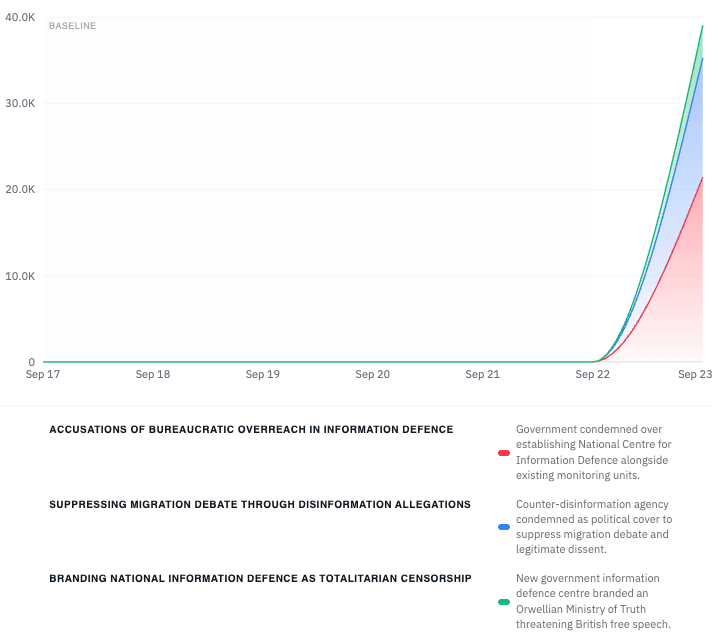
This was inevitable because the NCID will be coming for exactly this infrastructure. What is happening now is a self-defence reaction
The attack lines - the ammunition the infrastructure uses - revolve around the idea this is all part of a government effort to censor people and shut down freedom of expression. This is not a Hail Mary, Hit and Hope type of response. It has been in preparation for a while and already proved its worth in the US.
Tried and tested playbook
In July, the new director-general of the BBC floated an idea during a parliamentary hearing that social media platforms should be made to pipe “appropriate” information sources, such as the BBC, ITV and Channel 4, into people’s feeds. This was a terrible, unworkable idea that I complained about at the time.
The comment was like Christmas, Eid and Hanukkah rolled into one for Nigel Farage, and the platforms themselves, who presented it as proof the government was intending to “vet” what information appeared on social media feeds.
In 2022, the Biden administration set up the Disinformation Governance Board (DGB). It was attacked straight away as a de facto censorship body, or “US Ministry of Truth”. It closed the same year.
Similarly, the US State Department’s Global Engagement Center (GEC) was allowed to lapse at the end of 2024 after a sustained campaign accusing it of domestic censorship. In April 2025, the Trump administration shut down its successor office on the same grounds.
In both cases, the attacks were based on fabrications. Neither organisation was allowed to monitor US citizens. They were focused on disinformation spread by Russia, China and Iran. Politicians and commentators supplied the attack line, and the wider infrastructure of influencers, fake accounts, and friendly outlets made it look like a groundswell.
With those bodies gone, the US has become one of the most bot-riven information environments we have seen. A Valent snapshot investigation identified four networks (including one that was obviously Russian) reaching 77 million people on the US East Coast. That is a level of penetration rivalled only by states on Russia’s periphery.
Why the attack line sticks
So, if the basic claim is false, why do these attacks work? One reason is ill-judged and inaccurate comments like the BBC director-general’s that get hijacked. The other is the knowledge void around disinformation as a concept.
“Disinformation” is generally accepted to mean false information that is knowingly created, shared or amplified. The tricky part is who gets to decide what’s “false”. It’s here that a legitimate question arises: isn’t “false” subjective? What you say is false might not be false to someone else.
This is not what organisations like the DGB, the GEC and their European counterparts are concerned with. Their published reports show they investigate manipulation assets, techniques and tactics, and talk about how to disrupt them. They look for digital infrastructure designed to game the platforms and trick people. Tracking people with “off-colour views” isn’t part of the job.
It happened to us
At Valent, we have been very clear from the start that we track technical manipulation, not people’s views.
It means we can see when a narrative starts life on a fake website before being shared by bots and bounced around networks of accounts that exist to promote a hostile country, economic interests or a political actor. When such narratives succeed they can change policies, cause riots and manipulate markets. Our job is to catch them before they do.
Unsurprisingly, we are not popular with people who run such “disinformation” operations. The attack line used against us is the same as that used against the DGB and the GEC: Valent is a censorship body acting on behalf of various governments, shadowy forces, the Freemasons, etc.
What’s instructive is where the attack comes from, and why it sometimes fails.
Take our work for USAID, who was supporting Sudan’s civilian transitional government that took power after a popular uprising. We identified huge networks of bots seeking to influence or destabilise the new government. We submitted our evidence to Meta, which took down thousands of accounts belonging to different competing groups.
When Meta announced the takedown and said it was based on data supplied by Valent, the response was predictable and immediate. Partisan influencers and fake news sites, part of the same infrastructure as the networks we had flagged, decried the meddling of “shadowy intelligence contractors” aiming to silence legitimate voices criticising the government. Russian influence outlets mirrored the same claim.
However, that framing didn’t catch. Before the project began, we had explained our methodology to the Sudanese government: we don’t focus on any one actor or side, and we only look at activity that violates the platforms’ rules against coordination and manipulation. When civil society and journalists asked, the government could point to exactly that. Sudanese users knew all about bots, a favoured tactic of the previous regime. What surprised them was that Meta had rules against them.
The new centre is next
Of course, explaining yourself will never satisfy a bad faith actor. Those tying themselves up in knots to make a case that can be disproved in one click are showing their real concern: preserving the infrastructure that helps promote their cause.
The DGB never got as far as explaining itself. It was defined by its opponents within days of being announced, and the defence, when it came, was about protecting the public from falsehood, which invited the obvious question of “who decides what’s true”.
The NCID will face the same campaign, run through the same infrastructure it has been set up to root out. It is coming faster, because the playbook has already been proven.
That matters beyond one government body. I’m a huge believer in the positive potential of social media. By giving space to unheard voices we better understand our own world and each other. In such a world, we won’t agree with everything everyone says. But the distribution of the views we encounter should reflect the authentic views of the people in our society.
Instead, what we have now is billions of dollars spent making the views of ~10% seem like the views of ~80%. While self styled “free-speech absolutists” talk about the marketplace of ideas: this is market failure.
Who broke the rules?
So what should the new centre do about it? Our experience suggest two things.
The first, at least for now, is to anchor everything in the platforms’ own rules. A discussion about differing views of what’s true is a distraction. Bots, fake websites and coordinated networks break terms of service that every account holder signed up to, and platforms can be held to enforcing them. That moves the argument from “who decides what’s false?” to “who broke the platforms’ rules?”, which is a much harder question to spin.
The second is to communicate from the evidence. Burnham’s list at the UN, from bots and fake websites to forged branding, is actually only a small snapshot of the type of activity targeting the UK. At the same time, Russia is only one of several hostile actors involved. The low hanging fruit are the operations run purely by hostile foreign states.
What will get harder to talk about are those where domestic and foreign actors collude. For example, far right (but legal) parties in the UK being amplified by Chinese bot farms and benefitting from foreign funding. Then comes the issue of MAGA networks. And the potential for hostile networks run by the US government with the express purpose of amplifying individuals like Tommy Robinson.
The centre’s future success will be built on how it positions itself today. Focusing on infrastructure and platform rules will make it much easier for it to navigate the treacherous waters to come. Critically, as what happened to DGB shows, don’t let the disinformation merchants own your framing.
Hey @Amil - Lots of interesting takes / insights about the new centre from a new publication we've just launched. Take a look. Athena is founded by Jessica Cecil, who led the BBC's Trusted News Initiative. https://www.athenaworks.org/p/exclusive-ex-nato-chief-calls-on Cheers.
We have seen this "attempt" play out before. And often it doesn't work.
Its sad to say that our own personal bias bends what we determine is true. Now, I'll leave that to the psychologists to debate as... its kind of a spicy one.
However, most of what Burnham listed at the UN can be proven without judging anyone's views. He named bots, fake websites, falsified newspaper articles and forged branding of 28 British organisations. A fake BBC logo is fake whether you're left or right. A network of 500 accounts run from one office is a fact, not an opinion.
That is something we can work at.
So the centre's job should be tightly limited to things that can be checked: fake identities, bot networks, forged logos, hidden foreign funding. It sidesteps the "who decides what's true?" trap because nobody has to decide.
It should show metadata of fakery, rather than preach messaging.
That's where the line MUST be.